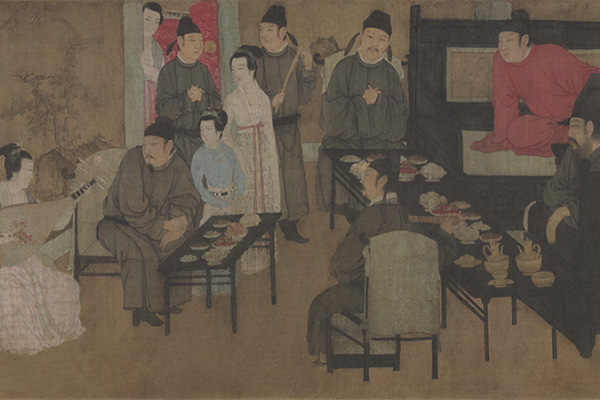
Five Dynasties Period
Introduction
The Five Dynasties Period (907-960) is a significant era in Chinese history marked by rapid political change, cultural evolution, and artistic development. It spans the time between the fall of the Tang Dynasty (618-907) and the establishment of the Song Dynasty (960-1279), characterized by short-lived regimes and a fragmented political landscape. This period is known for its substantial contributions to Chinese art and culture, particularly evident in the realms of painting, literature, and ceramics. Despite the political instability, the period laid critical foundations for the flourishing of the Song Dynasty that followed.
Historical Background
Following the collapse of the Tang Dynasty in 907, China entered a phase of political fragmentation, ushering in the Five Dynasties Period. This era saw the rise and fall of five successive dynasties in northern China: Later Liang, Later Tang, Later Jin, Later Han, and Later Zhou. Simultaneously, ten independent kingdoms arose in the south and west, known collectively as the Ten Kingdoms. The political landscape was dominated by military leaders who frequently seized power through coups, resulting in a constantly shifting political scene. Despite the turmoil, this period was vital in laying the groundwork for the reunification of China under the Song Dynasty in 960.
Political Structure
Regional Regimes
During the Five Dynasties Period, the political structure was marked by fragmented regimes across China. The north was primarily controlled by the Five Dynasties, while the south and west were home to the Ten Kingdoms. Each region had its own rulers, who often claimed imperial titles, and governance was largely based on military strength and alliances. The constant power struggles between these regional regimes led to instability but also fostered a climate where local leaders could exercise a degree of autonomy.
Governance and Administration
The governance system in this period was characterized by decentralized power, with military leaders and warlords holding significant authority. Political instability meant that regimes frequently changed, and as a result, administrative policies were often inconsistent. However, some regions managed to establish stable governance structures, which facilitated economic and cultural development. For instance, some of the southern kingdoms, such as Wu and Southern Tang, became centers of cultural and economic activities due to their relative political stability.
Economy
The economy during the Five Dynasties Period was diverse and varied significantly from region to region. In areas where stability was maintained, such as in some of the southern kingdoms, agriculture flourished, and local industries such as silk and porcelain production thrived. The Longquan kilns, for instance, began during this period and later became famous for their celadon ware. Trade also played a crucial role, with certain regions engaging in both domestic and international commerce, which helped sustain local economies despite the overall political instability.
Society and Culture
Art and Literature
The Five Dynasties Period was a time of significant cultural and artistic growth, laying the groundwork for the artistic achievements of the Song Dynasty. Painting, particularly landscape painting, saw considerable development, with artists like Dong Yuan pioneering styles that would influence later generations. Literature also evolved, with poetry and prose reflecting the themes of the era's turmoil and beauty. The period's artistic accomplishments were not limited to visual arts; advancements in ceramics, notably the production of exquisite celadon ware at the Longquan kilns, became highly influential.
Religion and Beliefs
Religion played a central role in the social fabric of the Five Dynasties Period. Buddhism, Taoism, and Confucianism continued to be the main spiritual and philosophical influences, with each finding varying levels of patronage among the different regimes. Buddhist temples and Taoist shrines were constructed, serving as centers of religious life and cultural exchange. Confucianism maintained its importance in governance and education, creating a blend of religious and philosophical traditions that shaped the cultural identity of the time.
The Dayao Longquan Kilns
Established during the Five Dynasties Period, the Dayao Longquan Kilns in Zhejiang province were instrumental in the production of Longquan celadon, a type of Chinese porcelain known for its jade-like glaze. These kilns became prominent during the Northern Song Dynasty and continued to thrive through the Southern Song to early Ming Dynasty (1127-1300s). Longquan celadon was integral to trade with European, Asian, and African countries, demonstrating the far-reaching cultural and economic impacts of the Five Dynasties Period. The site of these kilns is now preserved as a national archaeological site, highlighting the historical significance of this period in Chinese ceramic history.
Architectural and Artistic Heritage
Several historical sites and architectural landmarks from the Five Dynasties Period have been preserved and recognized for their cultural significance. Among these is the Ancient City of Pingyao, which, although founded later during the Ming and Qing dynasties, contains elements like the Zhenguo Temple that date back to this era. The painted statues from the Five Dynasties period housed in the Wanfo Hall of the temple are considered invaluable works of art, illustrating the period's artistic achievements. Similarly, the Songyang Academy, an important center of learning that thrived from the Later Zhou Dynasty of the Five Dynasties to the Song Dynasty, represents the educational and philosophical advancements of the era.
Military Affairs
Key Conflicts and Wars
The military landscape during the Five Dynasties Period was characterized by frequent conflicts and wars, often resulting in the swift rise and fall of regimes. The era began with the establishment of the Later Liang by Zhu Wen, who overthrew the Tang Dynasty. Subsequent dynasties, including the Later Tang, Later Jin, Later Han, and Later Zhou, were marked by internal coups and external threats, particularly from the Khitan Liao Dynasty to the north. These conflicts were pivotal in shaping the political boundaries and power dynamics of the period, ultimately leading to the reunification of China under the Song Dynasty.
Legacy and Impact
The legacy of the Five Dynasties Period is significant despite its relative brevity and political instability. Culturally, it was a time of artistic innovation, particularly in the fields of painting, ceramics, and literature, which set the stage for the cultural flourishing of the Song Dynasty. The political fragmentation of the period, while often seen as chaotic, also allowed for regional diversity and experimentation in governance, economics, and cultural practices. The advancements in trade and the exchange of cultural and artistic ideas contributed to China's historical development and set a foundation for future dynastic stability and prosperity.








